
Actuators and Sensors
Actuator Dynamometer
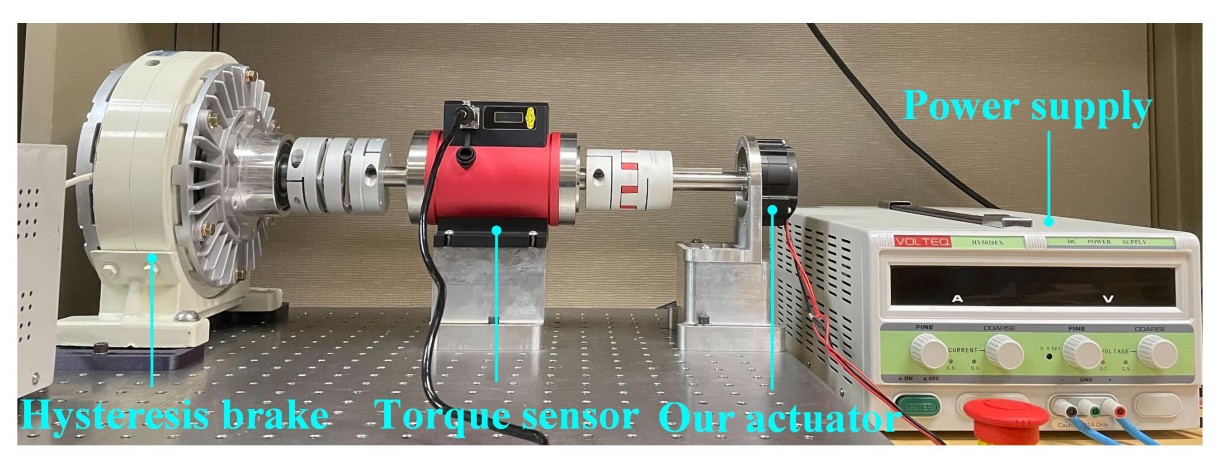
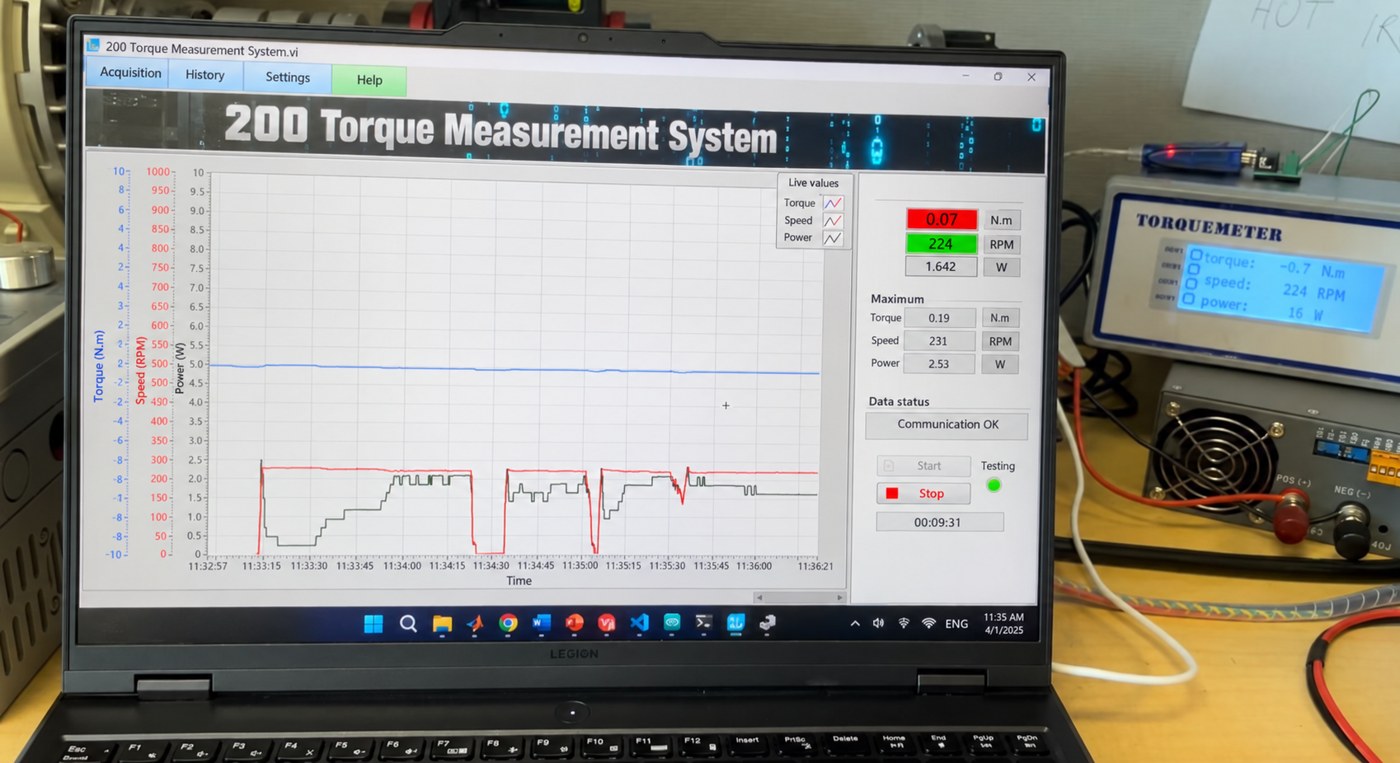
To characterize actuators quickly and reproducibly, we built an actuator dynamometer. A hysteresis brake applies a controlled resisting torque of up to 50 Nm, and an inline torque sensor (100 Nm full scale, 0.1% nonlinearity) between the brake and the actuator records output torque, speed, and power at 200 samples per second. Diaphragm couplings make it easy to swap actuators, and the bench works with different motor drivers, including ODrive and VESC-based controllers, so one platform serves many robots in the lab. With a current probe and a thermal camera, a single setup measures the torque-current relationship, efficiency, backdrive torque, and temperature rise. We also use the dynamometer to teach actuator testing in our course on intelligent healthcare systems and technologies.
Actuator Thermal Modeling via Transfer Functions and FEM Simulation
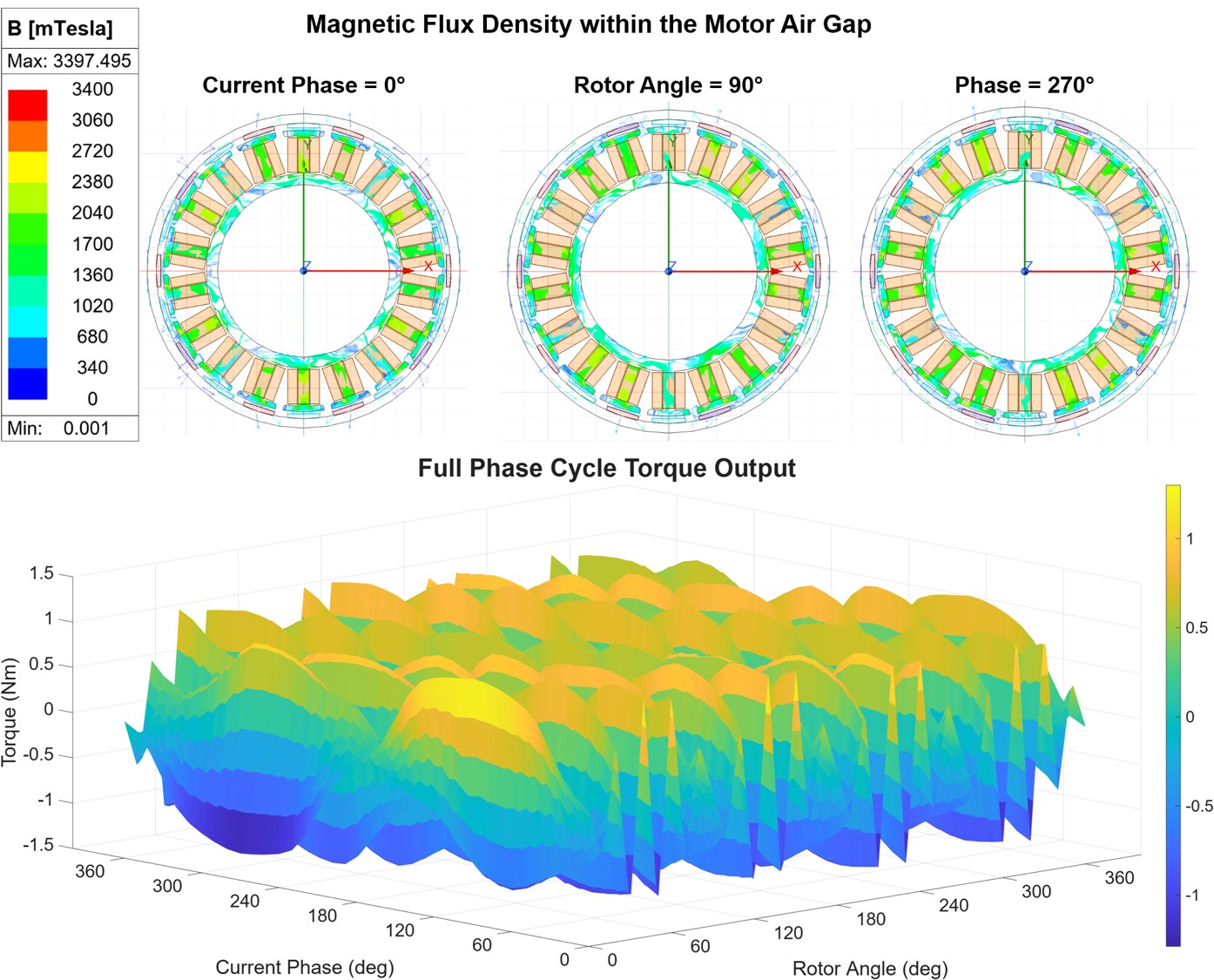
Wearable robots place high torque density actuators directly on the body, so an actuator must deliver high torque without overheating or making its housing too hot to touch. We use finite element analysis to model the magnetic flux density in the motor air gap and the resulting torque over a full cycle of current phase and rotor angle. The simulation shows that the motor produces about 1.2 Nm with a cogging torque of only about 6 mNm, which supports high backdrivability and mechanical transparency.
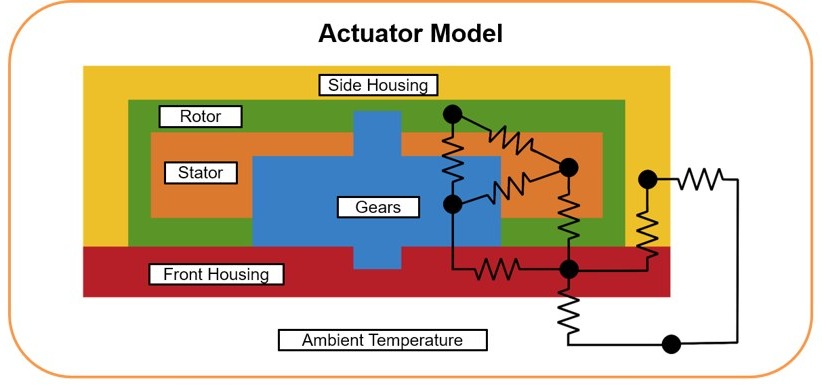
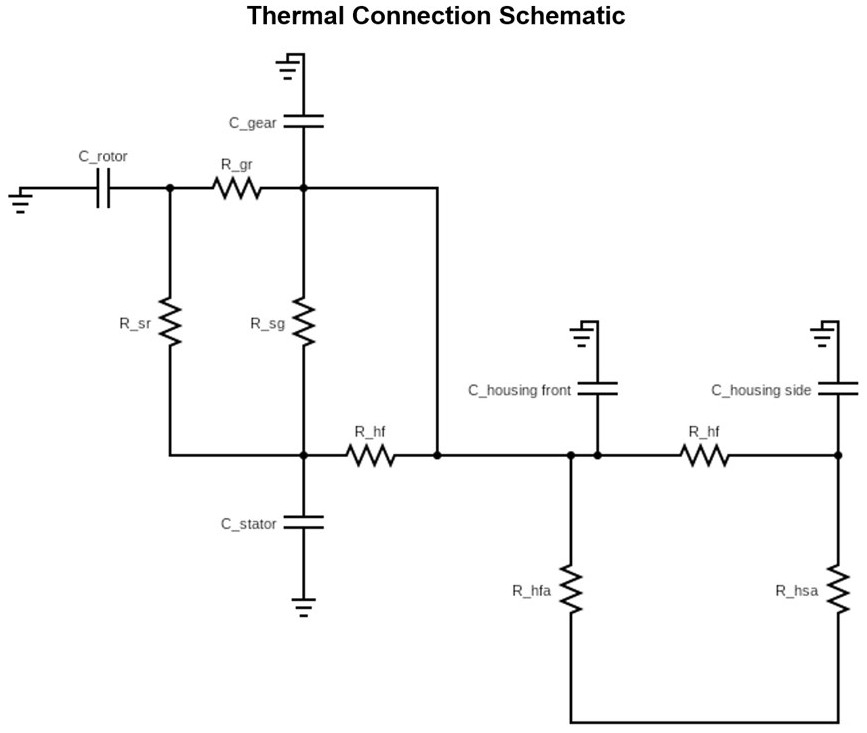
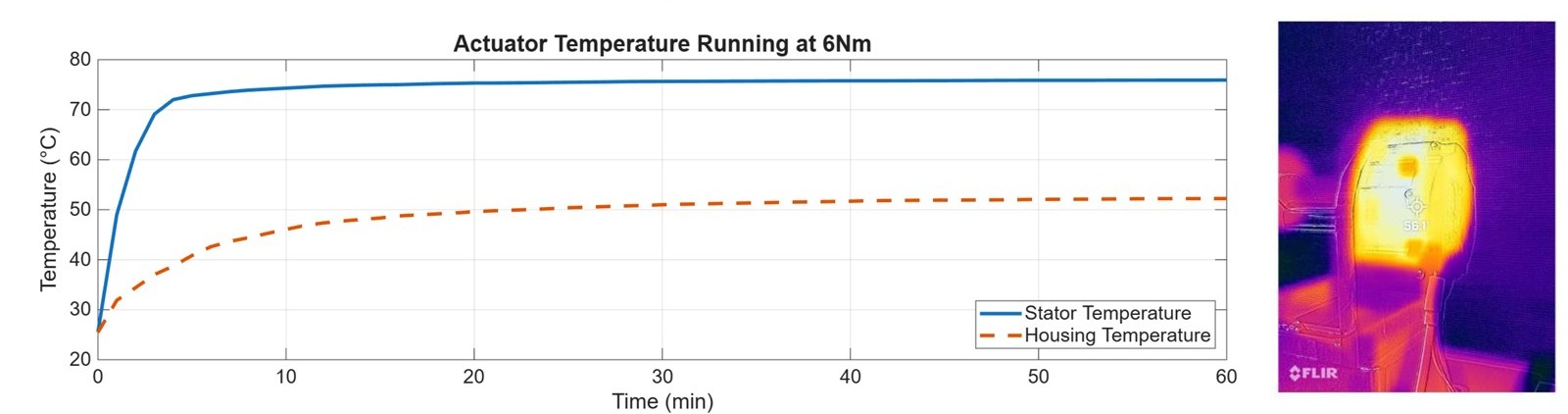
To predict temperature, we model the quasi-direct drive actuator as a lumped-parameter thermal network with five nodes (stator, rotor, gears, front housing, and side housing) connected through thermal resistances and capacitances. Written as a state-space transfer function driven by motor current and ambient temperature, the model uses the measured stator temperature to estimate the housing temperature that the user feels. During one hour of continuous operation at 6 Nm, the estimated housing temperature stays below the 60 °C safe surface temperature in ASTM C1055.
Benchtop Evaluation of a Quasi-Direct Drive Actuator
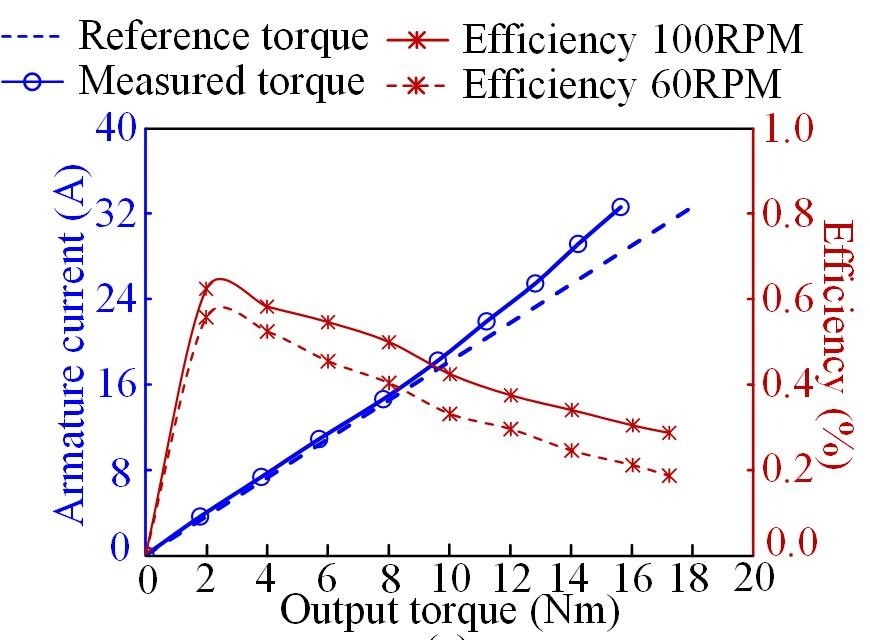
We test the actuator on our dynamometer with a thermal camera. Armature current increases approximately linearly with output torque, which suits torque-controlled wearable robots. The backdrive torque needed to turn the unpowered actuator peaks at about 0.3 Nm, so the actuator adds little resistance to the wearer’s motion. In one-hour tests of continuous operation at 4 Nm and 6 Nm, actuator temperatures stabilize, and the drive board stays at or below 48 °C.
Thermal-Aware Learning and Control
Learned controllers are only as reliable as the actuators that execute them. Using dual joint encoders and motor current, we model transmission stiffness, backlash, and the coupled electrical, thermal, and mechanical behavior of each joint. These models give the robot sensorless torque estimates, make simulation a more accurate digital twin of the hardware, and allow reinforcement learning policies that respect motor temperature limits during long tasks.
High Torque Density Electric Motor
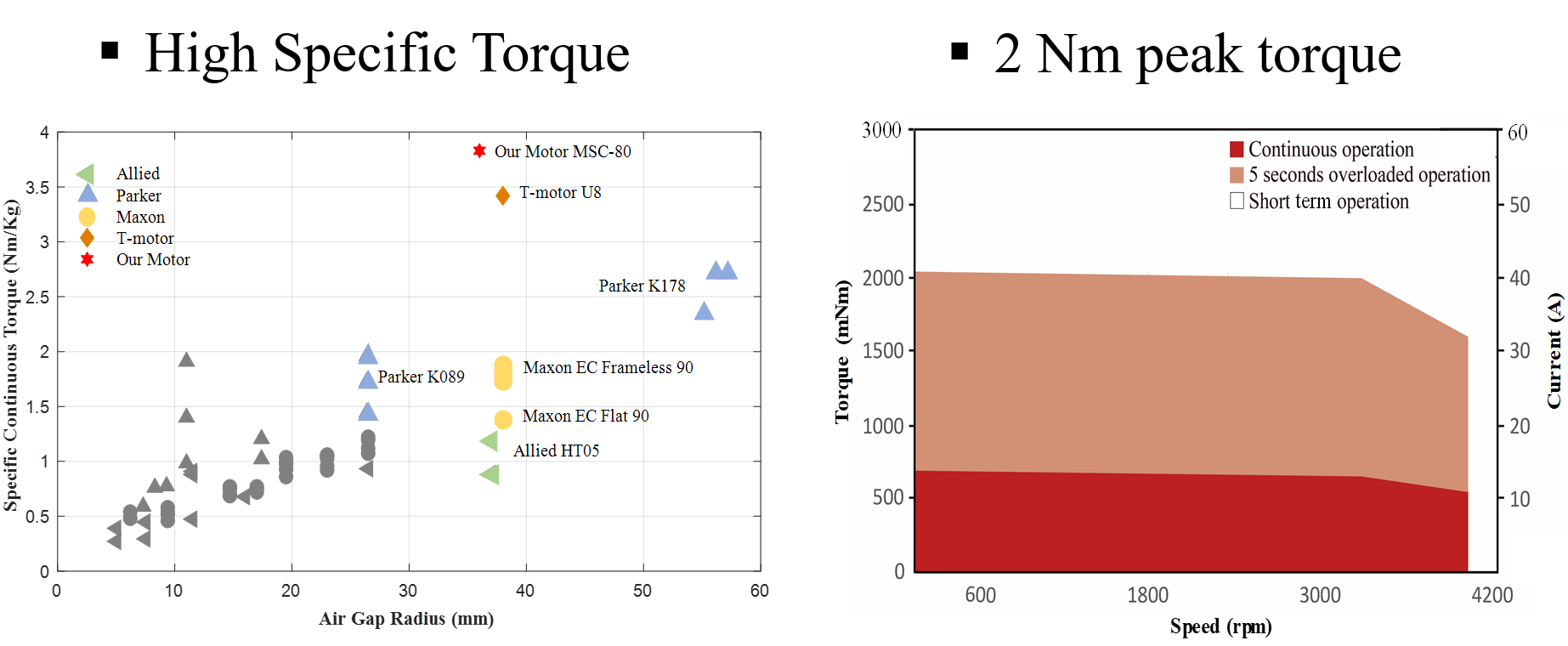
High torque density actuators enable a new robot design paradigm, quasi-direct drive, that significantly improves the bandwidth and transparency of robots that interact with humans or the environment. We developed a knee exoskeleton that combines a high torque density motor with a bidirectional cable transmission. The exoskeleton is lightweight and highly backdrivable, and its torque control bandwidth reaches 30 Hz. These characteristics enable safe interaction between users and the exoskeleton.
Sensing Suit
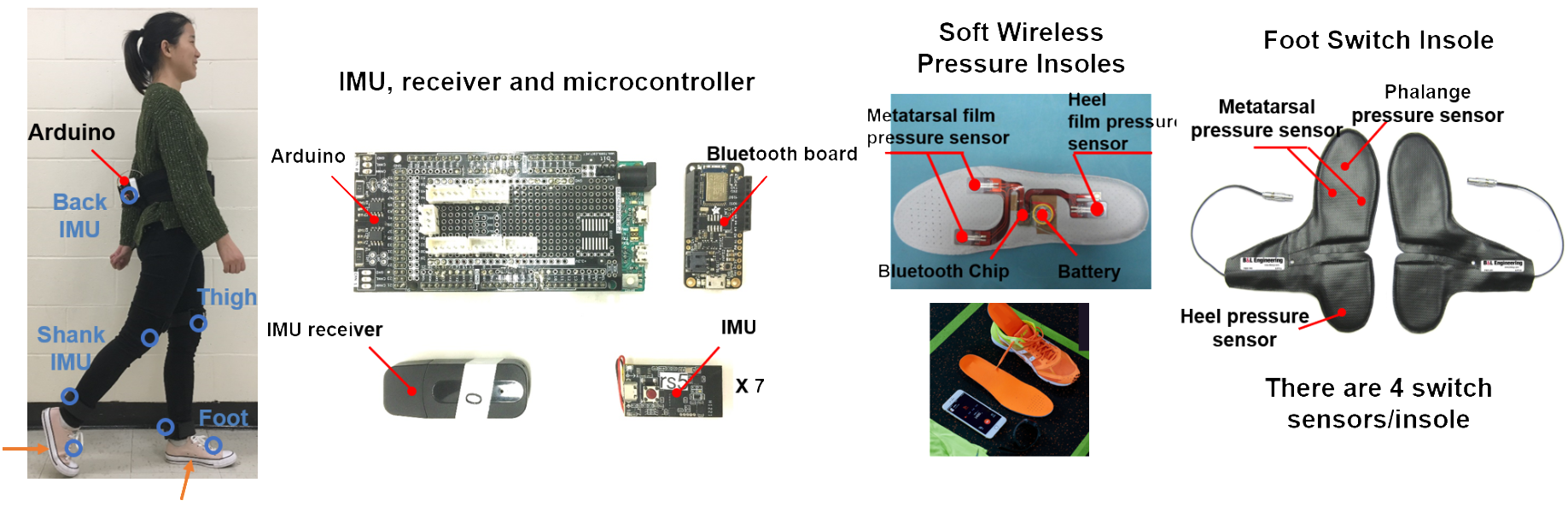
Our sensing suit measures human motion with seven IMUs and instrumented insoles. The wired version uses an IMU receiver, an Arduino board, and wired insoles; the wireless version uses wireless insoles and a Bluetooth board.
Fabry-Perot Interferometer Fiber Optic Force Sensor
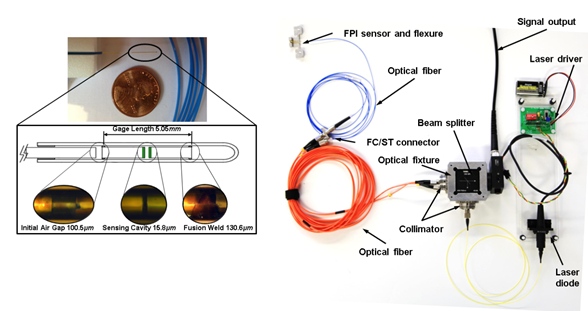
Off-the-shelf force and position sensors are not suitable for use in MRI because they can degrade images, malfunction, or raise safety issues. We develop optical sensors for force and position sensing that do not compromise image quality and allow haptic feedback during MRI-guided interventions.
Key Publications
- S. Yu, T.H Huang, X. Yang, C. Jiao, J. Yang, Y. Chen, J. Yi, H. Su. "Quasi-Direct Drive Actuation for a Lightweight Hip Exoskeleton with High Backdrivability and High Bandwidth", IEEE/ASME Transactions on Mechatronics. vol. 25, no. 4, pp. 1794-1802, Aug. 2020. [PDF] [Presentation Video] [Short Demo Video]
- J. Zhu, C. Jiao, I. Dominguez, S. Yu and H. Su, "Design and Backdrivability Modeling of a Portable High Torque Robotic Knee Prosthesis With Intrinsic Compliance for Agile Activities," in IEEE/ASME Transactions on Mechatronics, vol. 27, no. 4, pp. 1837-1845, Aug. 2022. [PDF] [Video] [AIM2022 Presentation Video]
- T. Huang*, S. Zhang*, S. Yu, M. MacLean, J. Zhu, A. Lallo, C. Jia, T. Bulea, M. Zheng and H. Su, "Modeling and Stiffness-Based Continuous Torque Control of Lightweight Quasi-Direct-Drive Knee Exoskeletons for Versatile Walking Assistance," in IEEE Transactions on Robotics (TRO), vol. 38, no. 3, pp. 1442-1459, Jun. 2022. [PDF] [Video]
- H. Su, I. Iordorchita, J. Tokuda, N. Hata, X. Liu, R. Seifabadi, S. Xu, B. Wood, and G. S. Fischer, "Fiber Optic Force Sensors for MRI-Guided Surgical Interventions and Rehabilitation", IEEE Sensors Journal, vol. 17, no. 7, pp. 1952-1963, 2017. [PDF]
- Y. Yan, J. S. Huang, J. Zhu, Z. Hou, W. Gao, I. Lopez-Sanchez, N. Srinivasan, A. Srihari, and H. Su "Compact and Foldable Hip Exoskeleton With High Torque Density Actuator for Walking and Stair-Climbing Assistance in Young and Older Adults," in IEEE/ASME Transactions on Mechatronics, 2025. [PDF] [Video]
See all publications.